


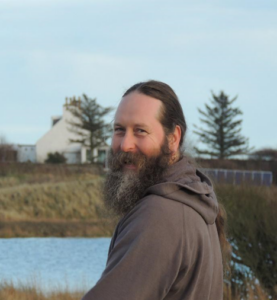
Prof Pete Smith
Pete Smith is Professor of Soils and Global Change at the Institute of Biological and Environmental Sciences at the University of Aberdeen (Scotland, UK) and Science Director of the Scottish Climate Change Centre of Expertise (ClimateXChange). His interests include climate change mitigation, soils, agriculture, food systems, ecosystem services modelling and nature-based solutions. He has been a convening lead author on many reports of the Intergovernmental Panel on Climate Change (IPCC) and the Intergovernmental Science-Policy Platform on Biodiversity and Ecosystem Services (IPBES). He is a Fellow of the Royal Society of Biology, a Fellow of the Institute of Soil Scientists, a Fellow of the Royal Society of Edinburgh, a Foreign Fellow of the Indian National Science Academy, a Fellow of the European Science Academy, and a Fellow of the Royal Society (London). Pete has published >680 peer-reviewed journal papers with total citations of >60,000 (>116,000 on Google Scholar). These papers have received >1000 citations per year since 2010 and >8000 per year since 2022. Web of Science H-index is 129 (171 on Google Scholar). He has been a Highly Cited Researcher each year since 2014, for the past four years in the fields of both Environment & Ecology and Agricultural Sciences.
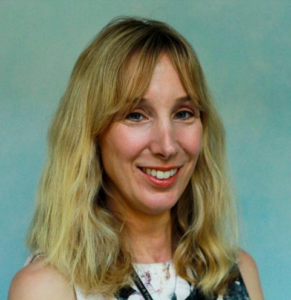
Prof Rosie Green
Rosie’s research focuses on the links between climate change and human health with a special focus on food systems. She is currently co-leading the Pathfinder Initiative project exploring health impacts of global actions to mitigate climate change, which has just reported its initial results in a Lancet Commission. She is a co-investigator on the GCRF South Asia Nitrogen Hub, the PAICE project exploring carbon mitigation in G7 countries and the Visibilize4ClimateAction project researching health impacts of climate change in Kenya. Rosie joined LSHTM in 2011 following her PhD in epidemiology and was promoted to Professor in 2022. She is Co-Director of the LSHTM Centre on Climate Change and Planetary Health which co-ordinates interdisciplinary research relating to climate change and health and also organises outreach and engagement activities. She is also Head of the Planetary Health Group at LSHTM. In 2020 she was on the scientific panel for the UK Climate Assembly which reported back to the UK government with policy recommendations for reaching net zero by 2050, and her work has also fed into the UK Food Strategy.

Prof Pauline Scheelbeek
Pauline Scheelbeek is an Associate Professor in planetary health & nutritional epidemiology at the London School of Hygiene & Tropical Medicine and the Director of the WHO Collaborating Centre on Climate Change, Health and Sustainable Development. The research of Pauline and her team focusses on discovering healthy, sustainable, resilient and realistic solutions that will accelerate transformational food system change, especially in the Global North. Currently she leads the Accelerating Behaviour Change towards Sustainable and Healthy Diets in Europe (ABC-SHEADE) project, co-leads the multi-country Sustainable and Health Food Systems (SHEFS) project in the UK, India and South Africa, leads the Digital Evidence Synthesis Tools for Climate and Health (DEST) project and until recently co-led the Food system Adaptations in Changing Environments in Africa (FACE-Africa) project in the Gambia. Pauline is an active STEM ambassador and frequently organises public engagement activities for school aged children in the UK and sub-Saharan Africa around environment, nutrition and health issues.
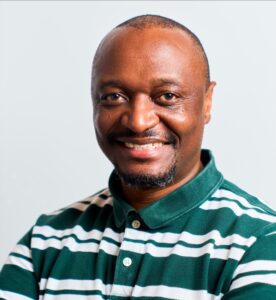
Prof Tafadzwanashe Mabhaudhi
Prof Tafadzwanashe Mabhaudhi is a globally recognized researcher, boundary spanner, and science advocate, working on complex water, energy, food and environmental systems at the interface of science, policy, and society. He has a track record of scientific leadership, capacity building and building partnerships needed to achieve outcomes and impacts from research, development and innovation. His goal is to work on research and development that informs policy, equality and transformation in Africa (and beyond). He is a Professor of Climate Change, Food Systems and Health at the London School of Hygiene and Tropical Medicine and Director of the Institute for Natural Resources (NPC) in South Africa, and an Honorary Professor at the University of Nottingham (Malaysia) and the University of KwaZulu-Natal (UKZN) in South Africa. Previously, he was the Research Group Leader for Sustainable and Resilient Food Systems at the International Water Management Institute and the Director of the Centre for Transformative Agricultural and Food Systems at UKZN. He holds strategic roles in various advisory committees and panels and is an editor of several high-impact journals. He holds a B.Sc. Agriculture Honours in Crop Science from the University of Zimbabwe, M.Sc. in Agric. Crop Science and PhD in Crop Science from UKZN. He has experience in research, development, capacity building and building partnerships across academia, public and private sectors, civil society, and communities. Tafadzwa has experience initiating, developing, leading and carrying out research for development on sustainable food systems, global environmental change and the water-energy-food nexus using multi- and transdisciplinary approaches. He has experience with project development, including donor engagement, applying good project management practices, and disseminating research results to key knowledge users and constituencies.
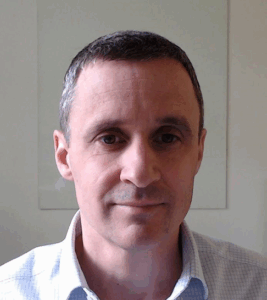
Prof Richard Pearson
Richard Pearson is Professor of Ecology and Associate Director (Research) for the Division of Biosciences at University College London. Richard is a member (and former Director, 2018-2022) of UCL’s Centre for Biodiversity and Environment Research (CBER), which is within the Department of Genetics, Evolution and Environment. He completed his Doctorate at the University of Oxford in 2004 and from 2005-2013 was a research scientist at the American Museum of Natural History in New York. Richard has been identified one of the world’s most Highly Cited Researchers in the field of Environment/Ecology. His research focuses on how biodiversity responds to environmental change, including climate change, and on evolutionary biogeography. He is a coinvestigator and workstream lead on the Wellcome Trust-funded Sustainable and Healthy Food Systems – Southern Africa (SHEFS-SA) project. Richard also teaches biodiversity and conservation biology to undergraduate and master's students. As Associate Director (Research) for the Division of Biosciences, Richard contributes to the development and delivery of strategic research objectives across the Division, which is a community of over 500 staff and 300 PhD students. In his former role as Director of CBER, he led a vibrant community of around 30 staff and 30 PhD students. Richard is on the editorial board of the journal Global Change Biology, is a member of the IUCN Species Survival Commission Climate Change Specialist Group, has been a contributing author for the Intergovernmental Panel on Climate Change, and is a member of the UK Natural Environment Research Council’s Peer Review College.
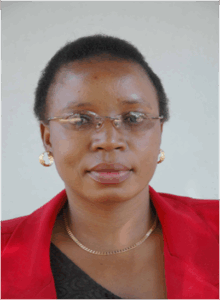
Prof Maud Muchuweti
Maud Muchuweti is Professor of Biocemistry at University of Zimbabwe. Her research interests include: Indigenous foods: Medico-nutritional properties and utilisation, Biological natural products and Water and sanitation. Maud managed to attract funding for projects as follows: United nations Universities Institute of Natural Resources in Africa (UNU-INRA), Nutritional Composition and Utilization of wild plant foods, W.K.Kellogg Foundation : To Create Awareness of Wild Plant Foods thereby preserving Biodiversity, Applying Food Multi Mix Concept on Traditional Wild Plant-based Foods: Funded by Development Partnerships in Higher Education (DelPHE) programme of the British Council, Norwegian Development Agency (NORAD), through the special programme, “Norwegian Programme for Capacity Building in Higher Education and Research for Development (NORHED)” to Launching and Strengthening Capacity at a Centre for Environmental Sustainability Research & Training (CESRT) in the Southern African Development Community (SADC) region, Council for Assisting Refugee Academics (CARA) and GCRF Interdisciplinary Award: Improving resilience and nutrient retention of leafy vegetables for improved health in Southern Africa. In SHEFS- SA Maud will work on profiling nutritional and anti-nutritional properties of drought resistant crops including bioavailability of nutrients. Maud obtained Doctorate degree in Biochemistry from the University of Zimbabwe in 1995 and then appointed to the position of Lecturer in the Department of Biochemistry. Maud was appointed to the position of Chairperson of the Department of Biochemistry from 2001 to 2008 and then Executive Dean of the Faculty of Science from 2009 to 2021. She has published 60 articles in refereed journals. Maud has supervised 10 PhD and 20 MSc students.
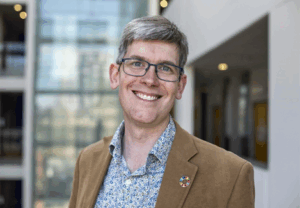
Dr Christian Reynolds
Dr Christian Reynolds is an expert in food loss and waste, sustainable diets, and food policy. He has researched and addressed these issues globally and has published extensively. He has provided evidence to parliaments and played a role in developing standards for food loss and waste accounting. His recent work focuses on citizen science, sustainability in the UK food system, and the environmental impact of public procurement. Currently, he is leading a project on reducing plastic packaging and food waste through product innovation simulation. He is also involved in a project investigating the effects of food taxes on the entire food system. He has previously held positions at WRAP where he worked on international food sustainability and integrating healthy sustainable eating and food waste reduction policies. Additionally, he has collaborated with global partners such as the World Bank, NRDC, and WWF.

Dr Liveness Jessica Banda
Dr Liveness Jessica Banda is an Associate Professor in Animal Science and Programmes Coordinator at Lilongwe University of Agriculture and Natural Resources (LUANAR) in Malawi where she has been working for over 22 years. She has a PhD in Animal Genomics and Disease Resistance obtained from University of Edinburgh, United Kingdom; MSc in Animal Science and BSc in Agriculture obtained from the University of Malawi. She is involved in teaching, research, outreach and consultancy in animal science and related rural development programs. She teaches various courses related to animal physiology, production systems and general livestock production. Her research interests are in livestock reproduction, physiology, livestock farming systems, sustainable food systems in relation to socio-economic development and climate change. Liveness has previously served as a head of Animal Science Department in addition to serving in various other leadership and teaching positions and committees at LUANAR and elsewhere. She currently serves as a reviewer for institutions and some journals and is a board member for several organisations She is an alumnus of African Women in Agricultural Development (AWARD) and Borlaug Fellowships and a member of the Malawi AWARD (MAWARD) Chapter. She recently participated in the Fulbright visiting scholar program where in USA. She has been principal investigator, team leader and projects coordinator for various research projects and consultancies. Research projects she has led include, Rethinking health - Innov8Health (One Health for Development), Sustainable Food systems in Malawi (FoodMa), Community-Based Breeding Program for Goats, and Frugal Innovations Practicum in Urban Food Market Systems.
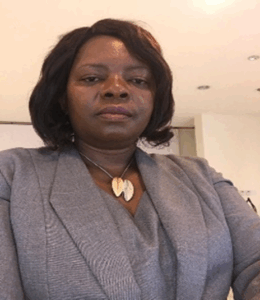
Prof Theresa Mkandawire
Theresa Mkandawire is a Professor and a Registered Civil Engineer with over 25 years’ experience at university level, specializing in water and sanitation. She is currently working at Malawi University of Business and Applied Sciences (formerly University of Malawi – The Polytechnic). She is an accomplished scholar with experience in teaching, research, resource mobilisation, leadership and consultancy. Theresa also has experience in managing projects targeted at low-income countries for different development partners. Apart from lecturing, Theresa has undertaken various consultancies nationally and internationally, in the area of water and sanitation, including development of water and sanitation policies for Malawi Government. She is a Founding member of Women in Engineering in Malawi and has been supporting and motivating girls and boys in Science, Technology, Engineering and Mathematics (STEM). She is the country Coordinator of a number of projects including Global Water Partnership - Malawi, a local chapter of the Global Water Partnership and Africa Sustainable Infrastructure Mobility (ASIM) project, which aims at building sustainable infrastructure in Africa through postgraduate capacity building. I hold or have held several other public offices including serving as the Secretary General of the Africa Engineering Deans Council (AEDC), Council member for Mzuzu University, Senate Member for Malawi University of Science and Technology, and 1st Vice President of the Malawi Institution of Engineers. She is currently a Board member for Malawi National Water Resources Authority.
Prof Richard Pearson
Richard Pearson is Professor of Ecology and Associate Director (Research) for the Division of Biosciences at University College London. Richard is a member (and former Director, 2018-2022) of UCL’s Centre for Biodiversity and Environment Research (CBER), which is within the Department of Genetics, Evolution and Environment. He completed his Doctorate at the University of Oxford in 2004 and from 2005-2013 was a research scientist at the American Museum of Natural History in New York. Richard has been identified one of the world’s most Highly Cited Researchers in the field of Environment/Ecology. His research focuses on how biodiversity responds to environmental change, including climate change, and on evolutionary biogeography. He is a coinvestigator and workstream lead on the Wellcome Trust-funded Sustainable and Healthy Food Systems – Southern Africa (SHEFS-SA) project. Richard also teaches biodiversity and conservation biology to undergraduate and master's students. As Associate Director (Research) for the Division of Biosciences, Richard contributes to the development and delivery of strategic research objectives across the Division, which is a community of over 500 staff and 300 PhD students. In his former role as Director of CBER, he led a vibrant community of around 30 staff and 30 PhD students. Richard is on the editorial board of the journal Global Change Biology, is a member of the IUCN Species Survival Commission Climate Change Specialist Group, has been a contributing author for the Intergovernmental Panel on Climate Change, and is a member of the UK Natural Environment Research Council’s Peer Review College.